Last updated: February 10, 2026
Rich Dad Poor Dad vs Intelligent Investor: Head to Head Comparison
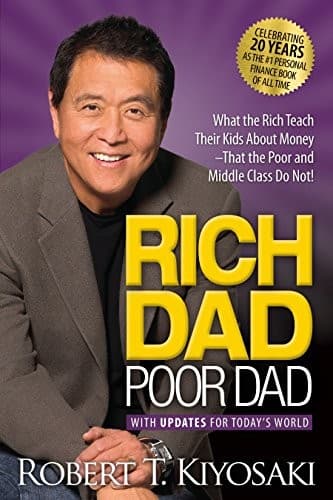
Rich Dad Poor Dad
by Robert T. Kiyosaki
💡 We earn from qualifying purchases. Learn more
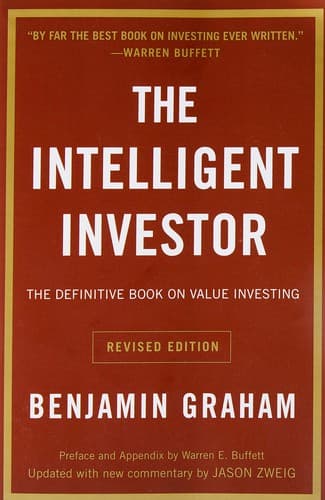
The Intelligent Investor
by Benjamin Graham
💡 We earn from qualifying purchases. Learn more
Quick Comparison
| Feature | Rich Dad Poor Dad | The Intelligent Investor |
|---|---|---|
| Main Focus | Financial mindset shift—how rich people think | Value investing methodology—how to invest in stocks |
| Core Message | Build assets generating passive income, not just work for salary | Invest with margin of safety, ignore market emotions |
| Approach | Narrative parable—story-based philosophy | Technical textbook—detailed analysis and formulas |
| Target Audience | Complete beginners needing financial literacy | Serious investors ready to study stock fundamentals |
| Difficulty Level | Very accessible—anyone understands stories | Dense and technical—requires concentration |
| Actionability | High-level concepts, fewer specific tactics | Detailed strategies, formulas, methodologies |
| Page Count | 336 pages (quick read) | 640 pages (serious commitment) |
| Price | $8.99 (incredible value) | $24.99 (worth it but pricier) |
| Feature | Rich Dad Poor Dad | The Intelligent Investor |
|---|---|---|
| Main Focus | Financial mindset shift—how rich people think | Value investing methodology—how to invest in stocks |
| Core Message | Build assets generating passive income, not just work for salary | Invest with margin of safety, ignore market emotions |
| Approach | Narrative parable—story-based philosophy | Technical textbook—detailed analysis and formulas |
| Target Audience | Complete beginners needing financial literacy | Serious investors ready to study stock fundamentals |
| Difficulty Level | Very accessible—anyone understands stories | Dense and technical—requires concentration |
| Actionability | High-level concepts, fewer specific tactics | Detailed strategies, formulas, methodologies |
| Page Count | 336 pages (quick read) | 640 pages (serious commitment) |
| Price | $8.99 (incredible value) | $24.99 (worth it but pricier) |
Strengths & Weaknesses
Rich Dad Poor Dad
✓ Strengths
- ✓Asset vs liability distinction changed entire relationship with money. Your house isn't asset if it takes money out of pocket every month—mind-blowing for most readers
- ✓Story format makes finance entertaining. Learning through Kiyosaki's two dads way more engaging than dry textbook explanations. Memorable narratives stick
- ✓Accessible for complete beginners. People give this to teenagers and they actually read it cover to cover. That accessibility is rare in finance books
- ✓178,000 ratings at 4.7 versus 42,000 at 4.6 shows massive broader appeal. Over 4x more readers. This resonates universally across demographics, countries
- ✓At $8.99, ridiculously cheap for book that could genuinely change financial trajectory. Best value-per-dollar in personal finance literature
✗ Weaknesses
- ✗Light on specific tactics. Kiyosaki tells you to buy assets but doesn't teach HOW to analyze real estate or stocks in detail. Philosophy without implementation
- ✗The 'Rich Dad' story has been questioned by investigative journalists. Some critics doubt whether Rich Dad was real person. Does it matter if lessons valuable? You decide
- ✗Heavy real estate focus. Kiyosaki made wealth in real estate, book leans that direction. If you want stock investing depth, this isn't enough
- ✗Can make wealth-building sound easier than it is. 'Just buy assets' is great philosophy but brutal in execution. Glosses over difficulty, failures, grinding reality
The Intelligent Investor
✓ Strengths
- ✓Warren Buffett calls it 'best book on investing ever written.' When greatest investor alive endorses something, you pay attention. Buffett studied under Graham at Columbia
- ✓Margin of safety is single most important investment concept. Buy stocks trading below intrinsic value with cushion for error. Principle protected fortunes for 75+ years
- ✓Mr. Market allegory brilliant. Graham personifies stock market as emotional business partner offering to buy/sell daily. When Mr. Market depressed, buy. When manic, sell
- ✓Jason Zweig's commentary updates 1949 text for modern markets. You get timeless principles plus current context. Best of both worlds
- ✓42,000 ratings at 4.6 shows serious investors rate this highest. Quality over quantity—readers who finish this deeply appreciate investment wisdom
✗ Weaknesses
- ✗Dense and technical at 640 pages. Requires serious commitment and concentration. Not beach reading—you need notebook, patience, willingness to reread sections
- ✗Originally published 1949. Despite updates, some examples feel dated. Graham references companies that don't exist anymore. Context requires translation
- ✗Assumes you have basic financial knowledge. If you don't know what P/E ratio is, you'll struggle without Google nearby. Not for absolute beginners
- ✗Less inspirational than Rich Dad. Graham teaching technical skills, not firing you up to take action. Motivational value lower despite superior content quality
Memorable Quotes
Rich Dad Poor Dad
💭 "The poor and the middle class work for money. The rich have money work for them."
💭 "An asset is something that puts money in your pocket. A liability is something that takes money out of your pocket."
💭 "The single most powerful asset we all have is our mind. If it is trained well, it can create enormous wealth."
💭 "It's not how much money you make, but how much money you keep, how hard it works for you, and how many generations you keep it for."
💭 "Winners are not afraid of losing. But losers are. Failure is part of the process of success."
The Intelligent Investor
💭 "The intelligent investor is a realist who sells to optimists and buys from pessimists."
💭 "The investor's chief problem—and even his worst enemy—is likely to be himself."
💭 "In the short run, the market is a voting machine but in the long run, it is a weighing machine."
💭 "Price is what you pay. Value is what you get."
💭 "The margin of safety is always dependent on the price paid."
💭 "You are neither right nor wrong because the crowd disagrees with you. You are right because your data and reasoning are right."
Why Read This?
Rich Dad Poor Dad
- •You're complete financial beginner needing to understand how rich people think
- •You want mindset shift before tactics—assets vs liabilities foundational
- •You're intimidated by finance books—this is most accessible ever written
- •You want to challenge conventional wisdom about jobs, houses, retirement
- •You need inspiration and motivation to control financial future
The Intelligent Investor
- •You're ready to seriously learn stock investing with proven principles
- •You want Warren Buffett's investing bible that shaped greatest investor
- •You need to understand margin of safety protecting your capital
- •You want to avoid speculation, hot tips, get-rich-quick schemes
- •You're willing to commit to 640 dense pages because you're serious
🏆 The Verdict
These books serve different stages of financial education. Rich Dad Poor Dad wins for Stage 1: financial mindset transformation (178,000 at 4.7). You need to understand assets vs liabilities and how rich people think before you can invest intelligently. The Intelligent Investor wins for Stage 2: actual stock investing skills (42,000 at 4.6). Once you have mindset, Graham teaches proven methodology to invest safely. Rich Dad changes how you think. Intelligent Investor changes how you invest. Both published decades ago (1997 vs 1949).
Read Rich Dad Poor Dad first, even if ultimately interested in stock investing. The mindset shift—understanding assets, liabilities, cash flow, how rich people think—is foundational to everything else. At $8.99 and 336 accessible pages, there's no excuse not to start here. Let Kiyosaki rewire your financial thinking. Asset vs liability definition (does this put money IN or take money OUT?) is simple enough for 12-year-old but profound for adults. Then, once you've absorbed that mindset and ready to actually invest in stocks, tackle The Intelligent Investor. Invest time in all 640 pages. Warren Buffett (greatest investor alive) studied under Benjamin Graham at Columbia—this is THE investing bible. Margin of safety concept alone worth the price—buy stocks trading below intrinsic value with cushion for error. Mr. Market allegory brilliant—personifies market as emotional business partner. When Mr. Market depressed, buy. When manic, sell. Jason Zweig's commentary updates 1949 text for modern markets. Published decades apart (1997 vs 1949), both timeless. 178,000 ratings versus 42,000 shows Rich Dad has broader appeal, but Intelligent Investor has serious investor audience. Price difference ($8.99 vs $24.99) and page difference (336 vs 640) reflect depth levels. Together they're complete financial education—mindset transformation plus investment methodology. Don't skip Rich Dad just because you want to invest. You need both stages.
You Might Also Like
More comparisons in this category to help you make the right choice
Explore More Comparisons
Browse all our book comparisons across different genres
All ComparisonsExplore comparisons by category: Business & Leadership and more
Browse CategoriesHave a comparison request? We'd love to hear from you!
Request Comparison