Last updated: February 12, 2026
Rich Dad Poor Dad vs The Millionaire Next Door: Head to Head Comparison
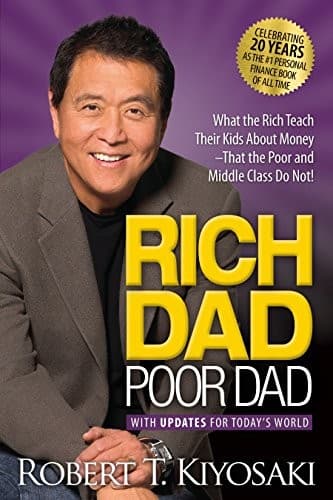
Rich Dad Poor Dad
by Robert T. Kiyosaki
💡 We earn from qualifying purchases. Learn more
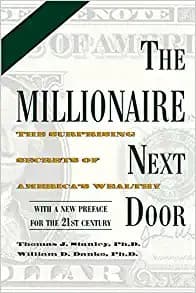
The Millionaire Next Door
by Thomas J. Stanley and William D. Danko
💡 We earn from qualifying purchases. Learn more
Quick Comparison
| Feature | Rich Dad Poor Dad | The Millionaire Next Door |
|---|---|---|
| Approach | Narrative parable—two dads story | Research-based—surveyed 1,000+ millionaires |
| Path to Wealth | Build assets generating passive income, invest, start businesses | Live below means, save aggressively, invest consistently |
| Core Philosophy | Assets vs liabilities—make money work for you | Wealth = what you accumulate, not what you earn/display |
| Key Insight | Think like entrepreneur and investor, not employee | Real millionaires are frugal and boring, not flashy |
| Evidence Type | Personal anecdotes and parable | Scientific research and statistical data |
| Risk Level | Higher—encourages entrepreneurship and active investing | Lower—proven path of frugality and steady accumulation |
| Page Count | 336 pages | 272 pages (shorter) |
| Feature | Rich Dad Poor Dad | The Millionaire Next Door |
|---|---|---|
| Approach | Narrative parable—two dads story | Research-based—surveyed 1,000+ millionaires |
| Path to Wealth | Build assets generating passive income, invest, start businesses | Live below means, save aggressively, invest consistently |
| Core Philosophy | Assets vs liabilities—make money work for you | Wealth = what you accumulate, not what you earn/display |
| Key Insight | Think like entrepreneur and investor, not employee | Real millionaires are frugal and boring, not flashy |
| Evidence Type | Personal anecdotes and parable | Scientific research and statistical data |
| Risk Level | Higher—encourages entrepreneurship and active investing | Lower—proven path of frugality and steady accumulation |
| Page Count | 336 pages | 272 pages (shorter) |
Strengths & Weaknesses
Rich Dad Poor Dad
✓ Strengths
- ✓The assets versus liabilities framework changed how millions think about every purchase. Kiyosaki's definition is simple: an asset puts money in your pocket, a liability takes money out. Your house isn't an asset if it costs you mortgage, taxes, maintenance every month—it's a liability. Rental property generating cash flow is an asset. A car is a liability. This single distinction transforms financial decision-making. Before buying anything, ask: does this put money in or take it out?
- ✓The two dads narrative makes abstract concepts unforgettable. Poor Dad (biological father) had PhD, worked government job, believed in job security, died broke. Rich Dad (friend's father) dropped out eighth grade, built businesses, invested in real estate, became one of Hawaii's richest men. Contrasting their advice through stories makes lessons stick. You remember Rich Dad saying 'the poor work for money, the rich make money work for them' because it's tied to character and conflict
- ✓134,000 ratings at 4.7 stars makes this one of the bestselling personal finance books ever. Published 1997, it's sold over 40 million copies in 51 languages. Nearly 6x more ratings than Millionaire Next Door (23,000 at 4.6). The massive readership means you're joining a global conversation. When you reference Rich Dad concepts, people know what you mean. That cultural penetration is valuable
- ✓Kiyosaki challenges conventional wisdom in ways that force you to think differently. Go to college, get good job, buy house, save in 401k, retire at 65—he questions the entire script. Whether you agree or not, confronting an alternative perspective is useful. Most finance books reinforce traditional thinking. This one says the traditional path creates wage slaves, not wealth. That's provocative and energizing
- ✓The motivational power is undeniable. After reading, you want to DO something—start a business, buy rental property, learn investing, escape the rat race. Stanley's Millionaire Next Door shows you the boring path that works. Kiyosaki fires you up to take action. For people paralyzed by conventional thinking, that spark is worth more than perfect tactics. Inspiration creates motion
- ✓The Cashflow Quadrant concept (expanded in his later book but introduced here) segments how people make money. E (Employee), S (Self-Employed), B (Business Owner), I (Investor). Kiyosaki argues moving from left side (E/S where you trade time for money) to right side (B/I where money works for you) is the key to wealth. This framework helps you see where you are and where you need to go
✗ Weaknesses
- ✗Rich Dad's existence has been questioned by investigative journalists. Kiyosaki claims Rich Dad was his best friend's father who taught him about money. But no one has ever identified who Rich Dad was, and Kiyosaki has given contradictory accounts over the years. Some believe Rich Dad is a composite character or complete fabrication. Does this invalidate the lessons? That's debatable, but the controversy bothers readers who value authenticity. It reads more like parable than memoir
- ✗The book is light on specific, actionable tactics. Kiyosaki tells you to buy assets that generate cash flow, but doesn't teach how to analyze real estate deals, evaluate stocks, or structure businesses. He says 'financial education is important' but doesn't provide that education in detail. You finish inspired but unclear on next steps. Compare to Stanley's Millionaire Next Door which gives you concrete behaviors to implement
- ✗Some advice is risky and doesn't apply to most people. Kiyosaki encourages quitting your job to start businesses, investing in speculative real estate, taking financial risks. But entrepreneurship isn't for everyone—research suggests only 10-15% of people have the risk tolerance and skill set. The book can make people feel like failures for choosing stable employment. Not everyone should or can be a business owner. That nuance is missing
- ✗Published 1997, some examples feel dated. The book discusses pre-internet economy, doesn't address modern investing vehicles (index funds, robo-advisors, crypto), and assumes certain economic conditions. The principles may be timeless, but the application needs updating for 2026 reality. Kiyosaki also started selling expensive seminars and courses afterward, which colors how some people view the book's credibility
- ✗The book can oversimplify wealth-building complexity. Buy assets, escape the rat race, achieve financial freedom—it sounds straightforward. Reality involves market crashes, bad investments, failed businesses, years of grinding with no results. Survivorship bias makes Kiyosaki's path seem easier than it is. He succeeded, but how many people followed his advice and failed? The book doesn't discuss failure rates or downsides adequately
The Millionaire Next Door
✓ Strengths
- ✓Based on rigorous scientific research studying over 1,000 millionaires. Stanley and Danko surveyed wealthy Americans to identify patterns. This is data-driven analysis, not opinion or anecdote. They found millionaires share seven common traits: live below means, allocate time/money efficiently toward building wealth, believe financial independence more important than displaying high social status, didn't receive help from parents, adult children are economically self-sufficient, good at identifying market opportunities, chose right occupation. These findings are evidence-based
- ✓The book destroys wealth myths spectacularly. Real millionaires don't drive Ferraris—they drive used F-150s and Toyotas. They don't shop at Neiman Marcus—they shop at Costco and clip coupons. They don't live in mansions—they live in middle-class neighborhoods in houses they bought 20 years ago. Mr. Friend in Texas, worth $10 million, cuts his own lawn, drives a 10-year-old truck, buys suits off the rack. This revelation is mind-blowing if you think wealth means luxury lifestyle
- ✓The Wealth Equation (Expected Income × Age ÷ 10) gives you a benchmark. If you're 40 earning $100,000, you should have $400,000 net worth ($100k × 40 ÷ 10). Above that you're a PAW (Prodigious Accumulator of Wealth). Below that you're a UAW (Under Accumulator of Wealth). This simple formula shows if you're on track. Most high-income earners are shocked to discover they're UAWs because they spend everything they make
- ✓The proven, boring path actually works for average people with discipline. You don't need to start a business, invest in risky real estate, or have entrepreneurial genius. Just earn decent income, live below your means, save 15-20% consistently, invest in index funds, repeat for 30 years. Stanley's millionaires are mostly boring—welders, accountants, small business owners who saved aggressively. This is reassuring for risk-averse W-2 employees who will never be entrepreneurs
- ✓Big Hat, No Cattle perfectly captures the difference between looking rich and being rich. Texas saying describes someone with expensive cowboy hat but no actual cattle (wealth). Stanley found high-income professionals (doctors, lawyers) often have low net worth because they spend on luxury cars, big houses, private schools to signal status. Meanwhile, unglamorous business owners accumulate millions by avoiding status spending. This distinction is critical
- ✓The 272-page length makes it tighter than Rich Dad's 336 pages. Stanley gets to the point with data, examples, and conclusions without unnecessary filler. The research-based approach means less narrative fluff and more actionable insights. You can read this in a weekend and implement findings Monday morning
✗ Weaknesses
- ✗Less inspirational than Rich Dad Poor Dad. Stanley's message is: live frugally, save consistently, accumulate slowly over decades. That's not exciting. It works, but it won't fire you up the way Kiyosaki's entrepreneurial vision does. Some people need emotional motivation to change behavior. Data-driven frugality doesn't provide that spark. You finish educated but not energized
- ✗The boring path has a much lower ceiling than entrepreneurial path. Stanley's millionaires typically have $1-10 million accumulated over 30-40 years. That's real wealth, but it won't make you ultra-rich. Kiyosaki's approach (build businesses, invest actively) has higher upside potential. If your goal is $100 million, frugal saving won't get you there. This book is for comfortable retirement, not dynastic wealth
- ✗Some data is from 1990s research conducted before internet boom, smartphone revolution, gig economy, crypto, modern investing platforms. The book was published 1996 based on surveys from early 1990s. While principles of frugality and consistent investing remain timeless, some examples feel dated. The millionaire profiles describe pre-digital economy patterns that may not fully translate to 2026
- ✗23,000 ratings versus Rich Dad's 134,000 (83% fewer) suggests narrower appeal. The research-based, academic approach doesn't resonate as widely as Kiyosaki's motivational narrative. Stanley gives you truth, but truth is often boring. Kiyosaki gives you inspiration, which spreads more virally even if it's less rigorous. Most people prefer exciting story to careful data analysis
- ✗The book doesn't encourage calculated risk-taking or entrepreneurship at all. Stanley's millionaires are successful but conservative. They own small businesses (dry cleaners, welding shops) or work in unglamorous professions. There's no discussion of venture-backed startups, real estate investing, or asymmetric bets. If you want to build serious wealth faster, pure frugality isn't enough. You need some upside exposure Stanley doesn't address
Memorable Quotes
Rich Dad Poor Dad
💭 "The poor and the middle class work for money. The rich have money work for them."
💭 "An asset is something that puts money in your pocket. A liability is something that takes money out of your pocket."
💭 "It's not how much money you make, but how much money you keep."
💭 "Financial freedom is available to those who learn about it and work for it."
💭 "The single most powerful asset we all have is our mind."
💭 "The lack of money is the root of all evil."
The Millionaire Next Door
💭 "Wealth is not the same as income. If you make a good income each year and spend it all, you are not getting wealthier. You are just living high."
💭 "Whatever your income, always live below your means."
💭 "Many people who live in expensive homes and drive luxury cars do not actually have much wealth."
💭 "Big Hat, No Cattle—we use this phrase to describe those who have high-consumption lifestyles but little wealth."
💭 "It is seldom luck or inheritance or advanced degrees or even intelligence that enables people to amass fortunes. Wealth is more often the result of a lifestyle of hard work, perseverance, planning, and, most of all, self-discipline."
💭 "If you're not yet wealthy but want to be someday, never purchase a home that requires a mortgage that is more than twice your household's total annual realized income."
Why Read This?
Rich Dad Poor Dad
- •You want to challenge conventional wisdom about jobs, security, traditional path
- •You need motivational fire to take action—Rich Dad inspires you differently
- •You're interested in entrepreneurship, investing, building passive income
- •You want to understand mindset shift from employee to investor/business owner
- •You need assets vs liabilities framework changing every financial decision
The Millionaire Next Door
- •You want research-backed evidence about how real millionaires built wealth
- •You prefer proven, boring path of frugality and investing over entrepreneurial risk
- •You need to destroy myths about wealth being luxury cars, big houses, designer clothes
- •You're W-2 employee wanting to know you can build wealth without starting business
- •You appreciate data-driven analysis over inspirational anecdotes
🏆 The Verdict
Rich Dad Poor Dad wins for most readers with significantly higher rating (4.7 versus 4.6) and massive popularity advantage (134,000 versus 23,000 ratings—nearly 6x more readers). Kiyosaki's 1997 parable at 336 pages delivers transformative mindset shift through two dads narrative (Poor Dad: PhD, government job, died broke; Rich Dad: eighth-grade dropout, built businesses, became wealthy). Assets versus liabilities framework changes how you think about every purchase. Challenges conventional wisdom powerfully. Motivates entrepreneurial action. Weaknesses: Rich Dad's existence questioned, light on specific tactics, risky advice for some. Stanley's 1996 research at 272 pages studying 1,000+ millionaires shows boring path that works—live below means, save aggressively, invest consistently. Evidence-based with seven common traits. Destroys luxury myths. Lower ceiling but proven. Read Rich Dad for inspiration, Millionaire Next Door for reality check.
Read Rich Dad Poor Dad first for the mindset transformation. At 336 pages with 134,000 ratings at 4.7 stars for $16.99, Kiyosaki's 1997 parable teaches through two dads: Poor Dad (biological father with PhD, stable government job, believed in education and job security, died broke) versus Rich Dad (best friend's father who dropped out eighth grade, built businesses and real estate empire, became one of Hawaii's richest men). The assets versus liabilities framework is worth the price alone—asset puts money IN your pocket, liability takes money OUT. Your house with mortgage, taxes, and maintenance? Liability. Rental property generating cash flow? Asset. This changes every purchase decision. Cashflow Quadrant shows four ways to earn: E (Employee), S (Self-Employed), B (Business Owner), I (Investor). Move from left side (trading time for money) to right side (money works for you). The book challenges conventional go-to-college-get-job-buy-house-retire path, asking why that creates wage slaves not wealth. Motivational fire is undeniable—you'll want to start business, invest, escape rat race. Weaknesses: Rich Dad's existence questioned by journalists (may be composite or fabrication), light on specific tactics (doesn't teach how to analyze deals), some advice risky (entrepreneurship isn't for everyone), dated 1997 examples, oversimplifies wealth-building complexity. After getting fired up by Rich Dad, read The Millionaire Next Door for reality check. At 272 pages with 23,000 at 4.6 stars for $17.99, Stanley and Danko's 1996 research surveyed 1,000+ millionaires to find seven common traits: live below means, allocate time/money efficiently, prioritize financial independence over status, didn't receive parental help, adult children self-sufficient, identify market opportunities, chose right occupation. Destroys myths: real millionaires drive used Toyotas not Ferraris, shop at Costco not Neiman Marcus, live in middle-class homes. Big Hat, No Cattle describes high earners with luxury lifestyles but low net worth. Wealth Equation (Expected Income × Age ÷ 10) benchmarks if you're on track. The boring path works—earn decent income, save 15-20%, invest consistently, repeat 30 years. Proven for W-2 employees who won't be entrepreneurs. Weaknesses: less inspirational than Rich Dad, lower wealth ceiling ($1-10M not $100M+), 1990s data feels dated, doesn't encourage calculated risk-taking. Use Rich Dad for vision and motivation, use Millionaire Next Door for discipline and execution.
You Might Also Like
More comparisons in this category to help you make the right choice
Explore More Comparisons
Browse all our book comparisons across different genres
All ComparisonsExplore comparisons by category: Business & Leadership and more
Browse CategoriesHave a comparison request? We'd love to hear from you!
Request Comparison