Last updated: February 7, 2026
Thinking Fast and Slow vs Predictably Irrational: Head to Head Comparison
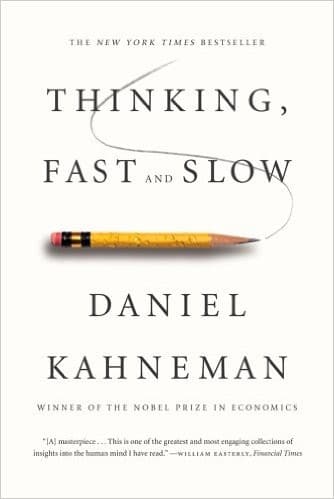
Thinking, Fast and Slow
by Daniel Kahneman
💡 We earn from qualifying purchases. Learn more
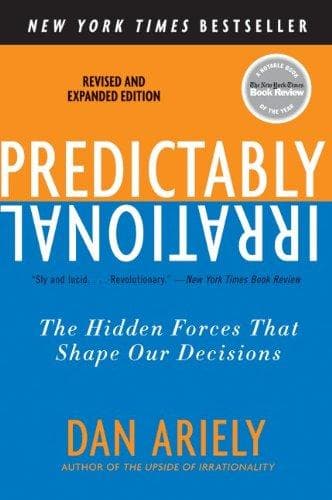
Predictably Irrational
by Dan Ariely
💡 We earn from qualifying purchases. Learn more
Quick Comparison
| Feature | Thinking, Fast and Slow | Predictably Irrational |
|---|---|---|
| Main Focus | Two systems of thinking (fast & slow) | Irrational patterns in decision-making |
| Approach | Comprehensive psychological framework | Specific experiments and findings |
| Author Background | Nobel Prize winner, academic legend | Behavioral economist, engaging storyteller |
| Writing Style | Dense, thorough, academic | Accessible, entertaining, conversational |
| Scope | Broad overview of cognitive psychology | Focused on practical irrationalities |
| Difficulty Level | Challenging, requires concentration | Easy to read, highly accessible |
| Page Count | 499 pages | 384 pages |
| Best For | Deep understanding of cognition | Practical insights into irrationality |
| Feature | Thinking, Fast and Slow | Predictably Irrational |
|---|---|---|
| Main Focus | Two systems of thinking (fast & slow) | Irrational patterns in decision-making |
| Approach | Comprehensive psychological framework | Specific experiments and findings |
| Author Background | Nobel Prize winner, academic legend | Behavioral economist, engaging storyteller |
| Writing Style | Dense, thorough, academic | Accessible, entertaining, conversational |
| Scope | Broad overview of cognitive psychology | Focused on practical irrationalities |
| Difficulty Level | Challenging, requires concentration | Easy to read, highly accessible |
| Page Count | 499 pages | 384 pages |
| Best For | Deep understanding of cognition | Practical insights into irrationality |
Strengths & Weaknesses
Thinking, Fast and Slow
✓ Strengths
- ✓Kahneman's 2011 Nobel Prize winner hit 68,000 reviews at 4.6. Created behavioral economics with Tversky—you're getting the source material.
- ✓System 1 (fast, automatic) vs System 2 (slow, deliberate) is genuinely transformative. Explains why you drive on autopilot but struggle with math.
- ✓Incredibly comprehensive: anchoring, availability heuristic, prospect theory, loss aversion, framing, overconfidence across 499 pages.
- ✓The Linda Problem (famous 'bank teller' example) blows minds. Kahneman uses specific, memorable examples that stick.
- ✓Brutally honest about his own biases. He admits falling for the same cognitive traps he studies—no guru claiming perfection.
- ✓Changes how you think permanently. You'll catch yourself thinking 'that's System 1' or 'I'm anchored.' Framework becomes mental toolkit.
✗ Weaknesses
- ✗499 dense pages demand full attention. If you zone out for two pages, you'll miss concepts. This isn't a beach read.
- ✗68,000 reviews at 4.6 vs Predictably's 34,000 at 4.5. Double the readers with higher rating shows broader appeal.
- ✗The writing is dry. Kahneman is brilliant but not entertaining—statistical discussions feel like textbooks.
- ✗Some chapters drag. 'Experiencing Self vs Remembering Self' feels overly long. Parts repeat—makes point, then makes it again.
- ✗Less practical than expected. Great at explaining WHY you're irrational but light on HOW to fix it.
Predictably Irrational
✓ Strengths
- ✓Ariely's 2008 book hit 34,000 reviews at 4.5. Experiments genuinely entertaining: FREE! chocolate vs truffle, placebos work even when you KNOW.
- ✓Way more accessible. 384 pages with conversational writing—you'll fly through this. Ariely writes like telling stories at a bar.
- ✓Immediately practical. Anchoring changes how you see restaurant wine lists. Online dating chapter explains why unlimited choices paralyze you.
- ✓Ariely makes you laugh while destroying confidence in your rationality. His 70% body burns story and pain experiments heartbreaking and fascinating.
- ✓Perfect gateway drug to behavioral economics. Bounce off Thinking? Ariely hooks you on concepts first, making Kahneman easier later.
- ✓'Predictably Irrational' thesis is powerful: We're irrational in consistent, predictable ways. Means we can anticipate and work around biases.
✗ Weaknesses
- ✗34,000 reviews at 4.5 versus Thinking's 68,000 at 4.6. Half the readers with slightly lower rating.
- ✗Not comprehensive. Covers specific phenomena (FREE!, social vs market norms) but no unified cognition theory like Kahneman.
- ✗Some experiments haven't replicated well. Replication crisis hit behavioral economics hard—some famous findings now questioned.
- ✗Can feel cherry-picked. Presents most entertaining experiments—great reading but sometimes maximum wow-factor over comprehensive truth.
- ✗Less rigorous. Ariely storyteller first, scientist second. More fun but less authoritative than Kahneman's Nobel Prize work.
Memorable Quotes
Thinking, Fast and Slow
💭 "Nothing in life is as important as you think it is, while you are thinking about it."
💭 "A reliable way to make people believe in falsehoods is frequent repetition, because familiarity is not easily distinguished from truth."
💭 "We can be blind to the obvious, and we are also blind to our blindness."
💭 "The confidence people have in their beliefs is not a measure of the quality of evidence but of the coherence of the story they have constructed."
💭 "Our comforting conviction that the world makes sense rests on a secure foundation: our almost unlimited ability to ignore our ignorance."
💭 "This is the essence of intuitive heuristics: when faced with a difficult question, we often answer an easier one instead, usually without noticing the substitution."
Predictably Irrational
💭 "We are pawns in a game whose forces we largely fail to comprehend."
💭 "Humans rarely choose things in absolute terms. We don't have an internal value meter that tells us how much things are worth. Rather, we focus on the relative advantage of one thing over another."
💭 "Free is a very special price—it can make a product irresistible, even if we don't need it."
💭 "We are not only irrational, but predictably irrational—our irrationality happens the same way, again and again."
💭 "The problem with comparing ourselves to others is that there is no end to such comparisons."
💭 "Once we buy a new product at a particular price, we become anchored to that price."
Why Read This?
Thinking, Fast and Slow
- •You want to understand the fundamental architecture of how your brain actually works—not surface tricks, but the deep operating system of System 1 vs System 2 thinking.
- •You're willing to work for it. This book demands focus and attention, but the payoff is massive—you'll see cognitive biases everywhere once you finish.
- •You want the authoritative source. Kahneman won the Nobel Prize for this work. This isn't someone interpreting research; it's the guy who DID the research.
- •You're making high-stakes decisions (business, investing, policy) and need to understand how bias affects judgment. Kahneman's framework is essential for serious decision-makers.
- •You love the Linda Problem, anchoring experiments, and prospect theory—you want to go deep on WHY these work, not just know that they exist.
Predictably Irrational
- •You want an entertaining introduction to behavioral economics that you'll actually finish. Ariely makes this fun, not homework.
- •You want immediate practical insights. After reading about the FREE! effect, you'll understand why Amazon Prime works. After the social norms chapter, you'll see why paying your friend for dinner ruins the relationship.
- •You struggle with dense academic writing. Ariely's conversational style makes complex concepts accessible without dumbing them down.
- •You're in marketing, sales, or design and need to understand consumer psychology. Ariely's experiments are directly applicable to pricing, messaging, and choice architecture.
- •You want to read Thinking Fast and Slow but are intimidated. Use this as your gateway drug—get hooked on the concepts with Ariely, then go deeper with Kahneman.
🏆 The Verdict
Thinking, Fast and Slow is more important—Nobel Prize-winning source material, more comprehensive, provides System 1/System 2 framework underpinning behavioral economics. Kahneman created this field with Tversky across 499 pages (68,000 reviews at 4.6). Predictably Irrational is more accessible—entertaining, immediately practical across 384 pages (34,000 reviews at 4.5). Ariely hooks you with FREE! stories and experiments. Thinking is foundational but dense; Predictably is gateway drug to concepts.
Read Predictably Irrational first if you're new to behavioral economics. Ariely's 2008 book (34,000 reviews at 4.5) delivers entertaining experiments across 384 pages: FREE! effect, social vs market norms, placebos working even when you know they're fake. You'll understand why Amazon free shipping works, why BOGO destroys rationality, why unlimited dating app choices paralyze you. Gateway drug to the field. Warning: half the readers of Thinking (34k vs 68k), some experiments haven't replicated well, cherry-picks most entertaining rather than comprehensive. Then read Thinking, Fast and Slow for foundational depth. Kahneman's 2011 Nobel winner (68,000 reviews at 4.6) explains System 1 (fast, automatic) vs System 2 (slow, deliberate) across 499 pages. The Linda Problem, prospect theory, loss aversion—created behavioral economics with Tversky. Changes how you think permanently. Warning: 499 dense pages demand attention, dry writing feels like textbooks, some chapters drag. If you only read one, choose based on need: Predictably for entertaining introduction you'll finish, Thinking for authoritative source material and unified framework.
You Might Also Like
More comparisons in this category to help you make the right choice
Explore More Comparisons
Browse all our book comparisons across different genres
All ComparisonsExplore comparisons by category: Psychology & Human Behavior and more
Browse CategoriesHave a comparison request? We'd love to hear from you!
Request Comparison