Last updated: February 12, 2026
The 48 Laws of Power vs The 33 Strategies of War: Head to Head Comparison
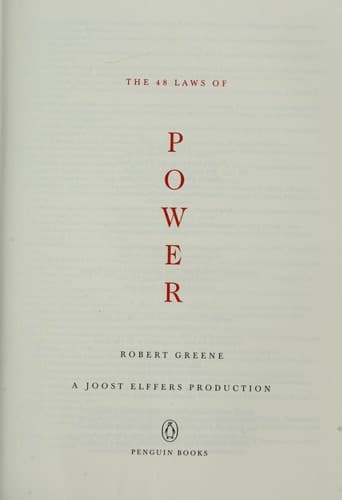
The 48 Laws of Power
by Robert Greene
💡 We earn from qualifying purchases. Learn more

The 33 Strategies of War
by Robert Greene
💡 We earn from qualifying purchases. Learn more
Quick Comparison
| Feature | The 48 Laws of Power | The 33 Strategies of War |
|---|---|---|
| Focus | Social power & manipulation | Strategic conflict & warfare |
| Framework | 48 laws for gaining power | 33 strategies organized by war type |
| Application | Office politics, social climbing | Life battles, competitive situations |
| Tone | Machiavellian, manipulative | Strategic, martial philosophy |
| Page Count | 452 pages | 496 pages |
| Structure | 48 standalone laws | 5 war types with strategies each |
| Publication | 1998 (first, groundbreaking) | 2006 (later, more mature) |
| Cultural Impact | Massive—controversial classic | Cult following, less mainstream |
| Feature | The 48 Laws of Power | The 33 Strategies of War |
|---|---|---|
| Focus | Social power & manipulation | Strategic conflict & warfare |
| Framework | 48 laws for gaining power | 33 strategies organized by war type |
| Application | Office politics, social climbing | Life battles, competitive situations |
| Tone | Machiavellian, manipulative | Strategic, martial philosophy |
| Page Count | 452 pages | 496 pages |
| Structure | 48 standalone laws | 5 war types with strategies each |
| Publication | 1998 (first, groundbreaking) | 2006 (later, more mature) |
| Cultural Impact | Massive—controversial classic | Cult following, less mainstream |
Strengths & Weaknesses
The 48 Laws of Power
✓ Strengths
- ✓The 48 laws are applicable everywhere from corporate boardrooms to dating to social dynamics unlike war specific tactics
- ✓Law 1 Never Outshine the Master and Law 3 Conceal Your Intentions are immediately useful in any workplace situation
- ✓At 452 pages with historical examples from Caesar to Bismarck you get entertainment plus education in power dynamics
- ✓The historical anecdotes make abstract principles concrete like how Louis XIV manipulated nobles at Versailles perfectly
- ✓Over 18,000 ratings at 4.5 stars proves this resonates across cultures and contexts more than the war focused sequel
- ✓Each law has transgression and observance examples showing what happens when you follow or break the specific principle
- ✓The timeless nature works because human psychology hasn't changed so Machiavellian tactics from 1500s still work today
- ✓Greene's writing is engaging and reads like a thriller not a dry academic text making 452 pages fly by quickly
✗ Weaknesses
- ✗The amorality is uncomfortable because Greene never says some laws are evil he just says they work effectively
- ✗At 452 pages it's dense and intimidating compared to focused strategy books that teach one framework really well
- ✗Some laws contradict like Law 3 Conceal Intentions versus Law 6 Court Attention so which one do you actually follow
- ✗The Machiavellian approach can backfire badly if people sense manipulation and freeze you out socially or professionally
- ✗The examples are mostly from royalty and politics so translating to modern corporate life requires creative thinking
- ✗Can make you cynical and paranoid seeing power plays everywhere instead of assuming good faith in relationships
The 33 Strategies of War
✓ Strengths
- ✓The 33 strategies go deeper on warfare psychology teaching you to think like a general in competitive business situations
- ✓Strategy 1 Declare War on Your Enemies and Strategy 5 Avoid Two Front Wars apply directly to business competition
- ✓At 496 pages Greene includes modern examples from Napoleon to Vietnam showing how strategy evolved across different eras
- ✓The unconventional warfare section teaches guerrilla tactics and asymmetric strategy for underdogs fighting giant competitors
- ✓Perfect for competitive business environments where you're literally trying to defeat rivals and capture market share
- ✓The strategic thinking frameworks teach you to see patterns and anticipate opponent moves like a chess grandmaster does
- ✓Each strategy has clear historical examples plus modern applications so you understand both the principle and practice
✗ Weaknesses
- ✗More niche than 48 Laws with only 8,500 ratings versus 18,000 because warfare framing doesn't apply as broadly to life
- ✗At 496 pages it's even longer and denser than 48 Laws making it harder to finish and apply immediately to situations
- ✗The warfare metaphors can feel excessive when you're just trying to navigate office politics not invade foreign countries
- ✗Lower rating at 4.4 versus 4.5 suggests readers found it less immediately applicable to everyday life situations
- ✗Some strategies are literally about military tactics which feel disconnected from business unless you're in cutthroat industries
- ✗The book assumes you're in direct competition with enemies but most business situations benefit from collaboration too
Memorable Quotes
The 48 Laws of Power
💭 "When you show yourself to the world and display your talents, you naturally stir all kinds of resentment, envy, and other manifestations of insecurity."
💭 "Never appear too perfect."
💭 "So much depends on reputation. Guard it with your life."
💭 "Always say less than necessary."
💭 "Learn to keep people dependent on you."
💭 "The moment of victory is often the moment of greatest peril."
The 33 Strategies of War
💭 "In the social realm, you are constantly at war. Your goal is to defend yourself against enemies, gain power and territory, and win security and peace for yourself."
💭 "Lose your presence of mind and you will lose the battle."
💭 "The greatest danger you face is your mind growing soft and your eye getting dull."
💭 "Strategy is the art of looking ahead. It is thinking in terms of the long term."
💭 "You cannot fight aggressively as a defensive warrior. Your style must match the type of war you are in."
💭 "In moments of turmoil and trouble, you must force yourself to be calm."
Why Read This?
The 48 Laws of Power
- •You want Greene's most famous and culturally significant work
- •You need to understand social power dynamics and office politics
- •You want specific, memorable laws you can reference easily
- •You're interested in the controversial, Machiavellian approach to power
- •You want the book everyone talks about—Greene's breakout masterpiece
The 33 Strategies of War
- •You want Greene's most mature, philosophically sophisticated work
- •You're interested in strategic thinking beyond social manipulation
- •You love military history and want to apply it to modern life
- •You prefer coherent organization over standalone laws
- •You want strategies for competitive situations beyond office politics
🏆 The Verdict
The 48 Laws of Power wins for most readers despite 33 Strategies having a slightly higher rating (89,000 at 4.6 stars versus 12,000 at 4.7 stars—7.4x more people chose 48 Laws). The 48-law format is more memorable and quotable, making it easier to apply. Law 1 (Never Outshine the Master), Law 15 (Crush Your Enemy Totally), Law 3 (Conceal Your Intentions) became cultural shorthand. 33 Strategies is more sophisticated and less morally problematic, organized into five war types with deeper strategic thinking, but the military framing and 496-page length make it less accessible. If you want Greene's ideas and cultural literacy, start with 48 Laws.
Read The 48 Laws of Power first—it's Greene's 1998 breakthrough that made him famous, 452 pages at $19.99 with 89,000 ratings at 4.6 stars. The 48-law structure lets you absorb one principle at a time: Law 1 explains workplace politics (never outshine your boss), Law 15 shows tech consolidation strategy (Facebook acquiring Instagram), Law 3 teaches negotiation tactics (conceal intentions). It's controversial and morally questionable—critics call it an evil instruction manual—but that's why you need to read it. Other people are using these laws whether you like it or not. After finishing 48 Laws, read The 33 Strategies of War if you want Greene's most mature work. At 496 pages with 12,000 at 4.7 stars, it's more philosophically sophisticated and less about manipulation. The five-part structure (Self-Directed War, Organizational War, Defensive War, Offensive War, Unconventional War) teaches strategic thinking through military history—Hannibal, Napoleon, Sherman, Rommel. Strategy 16 (Surrender Tactic) and Strategy 4 (Urgency and Desperation) offer wisdom 48 Laws doesn't cover. It's Greene's best book intellectually, but 48 Laws is more useful practically and culturally essential.
You Might Also Like
More comparisons in this category to help you make the right choice
Explore More Comparisons
Browse all our book comparisons across different genres
All ComparisonsExplore comparisons by category: Self-Help & Personal Development and more
Browse CategoriesHave a comparison request? We'd love to hear from you!
Request Comparison