Last updated: February 10, 2026
The Productivity Project vs Hyperfocus: Head to Head Comparison

The Productivity Project
by Chris Bailey
💡 We earn from qualifying purchases. Learn more
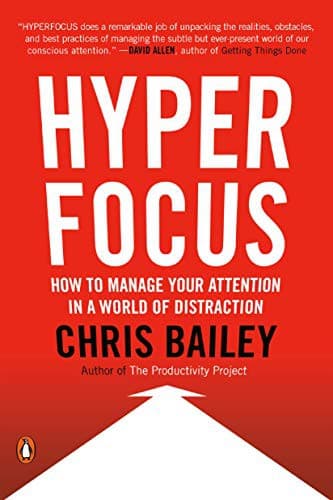
Hyperfocus
by Chris Bailey
💡 We earn from qualifying purchases. Learn more
Quick Comparison
| Feature | The Productivity Project | Hyperfocus |
|---|---|---|
| Scope | Broad—time, attention, and energy | Narrow—attention management only |
| Approach | Year-long personal experiments | Research-based with focused strategies |
| Core Concept | Productivity Trinity (time/attention/energy) | Hyperfocus vs. Scatterfocus modes |
| Published | 2016 (first book) | 2018 (second book, more refined) |
| Page Count | 304 pages | 272 pages (shorter) |
| Style | Personal narrative with lessons | More scientific and structured |
| Focus | Comprehensive productivity system | Deep dive into attention |
| Best For | Complete productivity overview | Mastering focus and creativity |
| Feature | The Productivity Project | Hyperfocus |
|---|---|---|
| Scope | Broad—time, attention, and energy | Narrow—attention management only |
| Approach | Year-long personal experiments | Research-based with focused strategies |
| Core Concept | Productivity Trinity (time/attention/energy) | Hyperfocus vs. Scatterfocus modes |
| Published | 2016 (first book) | 2018 (second book, more refined) |
| Page Count | 304 pages | 272 pages (shorter) |
| Style | Personal narrative with lessons | More scientific and structured |
| Focus | Comprehensive productivity system | Deep dive into attention |
| Best For | Complete productivity overview | Mastering focus and creativity |
Strengths & Weaknesses
The Productivity Project
✓ Strengths
- ✓The year-long experiment makes findings feel tested—Bailey tried waking 5:30 AM for months, worked 90-hour weeks, meditated 35 hours in single week. Not theory, but lived experience with data
- ✓Comprehensive coverage of productivity trinity: time (how you schedule), attention (where you focus), energy (your capacity). Nothing left out—complete system
- ✓The Rule of 3 is brilliantly simple—identify three daily priorities before doing anything else. Forces clarity on what matters versus busywork that feels productive but isn't
- ✓Personal stories make concepts relatable. Bailey's 5:30 AM wake experiment failed (he's night owl), 90-hour weeks crashed productivity. Failures teach as much as successes
- ✓4,200 ratings at 4.1 versus 3,800 at 4.3 shows solid readership. More comprehensive, appeals to readers wanting complete productivity overhaul
✗ Weaknesses
- ✗Can feel scattered covering so many topics. Time management, attention, energy, meditation, exercise, sleep, caffeine—304 pages jump between experiments without deep cohesion
- ✗Less focused than Hyperfocus (ironic given productivity theme). Tries to cover everything, masters nothing deeply. Breadth sacrifices depth
- ✗Some experiments feel like interesting stories more than actionable advice. Meditating 35 hours in week is extreme—what does average person do with that insight?
- ✗Lower rating (4.1 vs 4.3) suggests readers found it less immediately useful. Comprehensive but overwhelming, versus Hyperfocus's laser focus on single skill
Hyperfocus
✓ Strengths
- ✓More focused and refined—Bailey learned from first book. Hyperfocus zeroes in on attention management (the most critical productivity skill) and nails it comprehensively
- ✓The hyperfocus/scatterfocus framework is elegant. Hyperfocus (direct attention to single task, eliminate distractions) for productivity. Scatterfocus (let mind wander, make connections) for creativity. Two modes, know when to use each
- ✓Shows how to be both productive AND creative. Most productivity books optimize for output, killing creativity. Scatterfocus mode (shower thoughts, walks, daydreaming) generates insights hyperfocus executes
- ✓More science-backed research than personal anecdotes. References studies on attention span (average 40 seconds on digital device), distraction costs (23 minutes to refocus after interruption), default mode network
- ✓Shorter and easier to digest—272 pages versus 304. No filler, pure focused content on managing attention in distracted world
✗ Weaknesses
- ✗Narrower scope—only covers attention, not time or energy. If you want complete productivity system covering all three, Productivity Project more comprehensive
- ✗Less personal and relatable than first book. Fewer stories about Bailey's experiments, more research citations. Effective but less warm and engaging
- ✗If you've read Deep Work (Cal Newport), some concepts feel familiar. Hyperfocus overlaps with Newport's deep work, scatterfocus with Newport's downtime. Not identical but similar territory
- ✗Doesn't provide complete productivity system. You'll master attention but still need time management, energy management, habit formation from other sources
Memorable Quotes
The Productivity Project
💭 "Productivity isn't about doing more. It's about doing what's most meaningful."
💭 "Your time, attention, and energy are finite. Invest them wisely."
💭 "The Rule of 3: Identify three things you want to accomplish each day."
💭 "Working longer hours doesn't make you more productive. Working smarter does."
💭 "Energy management is as important as time management."
💭 "You can't manage your time until you manage your attention."
Hyperfocus
💭 "How effectively you focus determines how productive and creative you become."
💭 "Hyperfocus allows you to think deeply. Scatterfocus allows you to think creatively."
💭 "Attention is the most powerful tool you have for living a productive and meaningful life."
💭 "The quality of your attention determines the quality of your life."
💭 "Scatterfocus isn't wasted time. It's essential for creativity and planning."
💭 "Your ability to focus is your most important skill."
Why Read This?
The Productivity Project
- •You want comprehensive coverage of productivity including time, attention, and energy
- •You enjoy personal experiments and learning from someone's year-long journey
- •You need a complete productivity system, not just one aspect
- •You want Bailey's foundational book before diving into specific topics
- •You're interested in multiple productivity experiments and findings
Hyperfocus
- •You specifically struggle with focus and attention in a distracted world
- •You want to understand both productivity (hyperfocus) and creativity (scatterfocus)
- •You prefer focused, scientific approaches over broad surveys
- •You've already read productivity basics and want depth on attention
- •You want Bailey's more refined, mature thinking
🏆 The Verdict
Hyperfocus wins as Bailey's more refined work with higher rating (3,800 at 4.3 versus 4,200 at 4.1). It's focused, scientific, and addresses the most critical productivity skill—attention management. The hyperfocus/scatterfocus framework (direct attention to single task for productivity, let mind wander for creativity) is powerful for both output and innovation. The Productivity Project is broader but less focused. Hyperfocus delivers more value in less time—272 pages versus 304.
Read Hyperfocus if you want Bailey's best work on the most critical productivity skill—attention management. The hyperfocus/scatterfocus framework is powerful: hyperfocus (direct attention to single task, eliminate distractions) makes you productive, scatterfocus (let mind wander, shower thoughts, walks) makes you creative. Most productivity books optimize for output, killing creativity—Bailey shows how to be both. More refined than Productivity Project (published 2018, his second book versus 2016 first). Science-backed with studies on attention span (average 40 seconds on digital device), distraction costs (23 minutes to refocus after interruption), default mode network. Shorter at 272 pages, no filler. Higher rating (4.3 vs 4.1) shows readers find it more useful. Read The Productivity Project if you want Bailey's complete system covering time, attention, and energy—comprehensive productivity overhaul. The year-long experiment (waking 5:30 AM for months, working 90-hour weeks, meditating 35 hours in week) makes findings feel tested, not theoretical. The Rule of 3 (identify three daily priorities) is brilliantly simple. Personal stories relatable—5:30 AM failed (he's night owl), 90-hour weeks crashed productivity. But 304 pages feel scattered covering too many topics (time, attention, energy, meditation, exercise, sleep, caffeine), less focused than Hyperfocus ironically. Lower rating suggests overwhelming versus actionable. Start with Hyperfocus unless you want comprehensive overview.
You Might Also Like
More comparisons in this category to help you make the right choice
Explore More Comparisons
Browse all our book comparisons across different genres
All ComparisonsExplore comparisons by category: Self-Help & Personal Development and more
Browse CategoriesHave a comparison request? We'd love to hear from you!
Request Comparison