Last updated: February 10, 2026
One Up on Wall Street vs Beating the Street: Head to Head Comparison
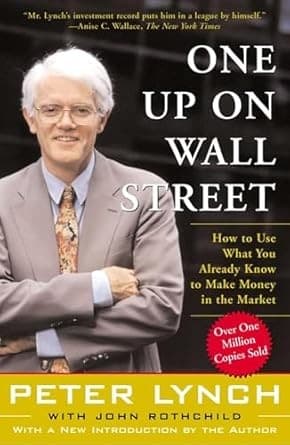
One Up on Wall Street
by Peter Lynch
💡 We earn from qualifying purchases. Learn more
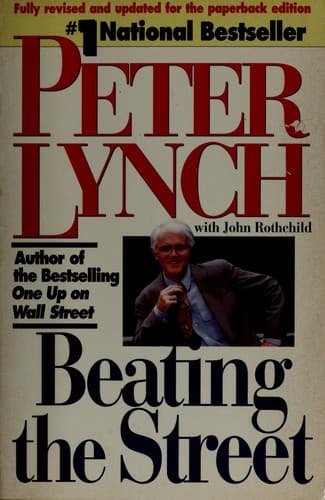
Beating the Street
by Peter Lynch
💡 We earn from qualifying purchases. Learn more
Quick Comparison
| Feature | One Up on Wall Street | Beating the Street |
|---|---|---|
| Main Focus | Core investing philosophy and framework—how to find great stocks | Real-world application—Lynch's actual picks and portfolio through 1991-1993 |
| Format | Teaching the investment philosophy and methodology | Case studies and real-time picks with hindsight analysis |
| Key Framework | Six stock categories, PEG ratio, invest in what you know | Application of One Up principles to actual market conditions |
| Audience | Beginning investors learning Lynch's approach from scratch | Readers who've read One Up and want to see it applied |
| Popularity | 5,800 ratings—much more widely read and recommended | 1,200 ratings—smaller, more specialized audience |
| Best For | Learning the foundational philosophy of stock picking | Seeing how Lynch actually applied his philosophy in real markets |
| Page Count | 304 pages | 320 pages |
| Published | 1989 | 1993 |
| Feature | One Up on Wall Street | Beating the Street |
|---|---|---|
| Main Focus | Core investing philosophy and framework—how to find great stocks | Real-world application—Lynch's actual picks and portfolio through 1991-1993 |
| Format | Teaching the investment philosophy and methodology | Case studies and real-time picks with hindsight analysis |
| Key Framework | Six stock categories, PEG ratio, invest in what you know | Application of One Up principles to actual market conditions |
| Audience | Beginning investors learning Lynch's approach from scratch | Readers who've read One Up and want to see it applied |
| Popularity | 5,800 ratings—much more widely read and recommended | 1,200 ratings—smaller, more specialized audience |
| Best For | Learning the foundational philosophy of stock picking | Seeing how Lynch actually applied his philosophy in real markets |
| Page Count | 304 pages | 320 pages |
| Published | 1989 | 1993 |
Strengths & Weaknesses
One Up on Wall Street
✓ Strengths
- ✓Lynch's invest in what you know philosophy empowers regular people to find winners at the mall before Wall Street does
- ✓The six stock categories from slow growers to turnarounds help you match picks to your risk tolerance
- ✓Real examples like Dunkin Donuts and Taco Bell show how consumer observation beats analyst reports
- ✓The PEG ratio comparing PE to growth rate gives you one simple metric to spot undervalued stocks
✗ Weaknesses
- ✗The 1989 bull market context makes some stocks seem easier to pick than they'd be in bear markets
- ✗Lynch's access to research and company management as Fidelity manager isn't available to retail investors
- ✗Some readers struggle to apply the folksy anecdotes to actual stock selection decisions
Beating the Street
✓ Strengths
- ✓The diary format showing Lynch's actual 1992 to 1993 picks lets you see his process in real time
- ✓Honest coverage of his losses like Boston Chicken prevents the book from being survivorship bias cheerleading
- ✓Updated thinking on categories like savings and loans shows how Lynch adapts to changing markets
- ✓The focus on small cap stocks gives you hunting grounds where individual investors still have edges
✗ Weaknesses
- ✗The time specific picks from 1992 feel less timeless than the principles in One Up On Wall Street
- ✗Some featured stocks like Chrysler eventually failed despite Lynch's bullish analysis at the time
- ✗Less accessible for beginners compared to the foundational teaching approach of the first book
Memorable Quotes
One Up on Wall Street
💭 "Behind every stock is a company. Find out what it's doing."
💭 "The person that turns over the most rocks wins the game. And that's always been my philosophy."
💭 "Go for a business that any idiot can run—because sooner or later, any idiot probably is going to run it."
💭 "Know what you own, and know why you own it."
💭 "In the long run, it's not just how much money you make that will determine your future prosperity. It's how much of that money you put to work by saving it and investing it."
💭 "You get recessions, you have stock market declines. If you don't understand that's going to happen, then you're not ready, you won't do well in the markets."
💭 "The P/E ratio of any company that's fairly priced will equal its growth rate."
💭 "Never invest in any idea you can't illustrate with a crayon."
Beating the Street
💭 "If you can follow only one bit of data, follow the earnings—assuming the company in question has earnings."
💭 "The trick is not to learn to trust your gut feelings, but rather to discipline yourself to ignore them. Stand by your stocks as long as the fundamental story of the company hasn't changed."
💭 "Absent a lot of surprises, stocks are relatively predictable over twenty years. As to whether they're going to be higher or lower in two to three years, you might as well flip a coin to decide."
💭 "When you sell in desperation, you always sell cheap."
💭 "The stock market really isn't a gamble, as long as you pick good companies that you think will do well, and not just because of the stock price."
💭 "The natural-born investor is a myth."
💭 "The key to making money in stocks is not to get scared out of them."
Why Read This?
One Up on Wall Street
- •Learn from the greatest mutual fund manager of all time (29.2% annual returns)
- •Master the 'invest in what you know' philosophy
- •Understand the six stock categories and where to find opportunities
- •Get the PEG ratio framework for valuation
- •Perfect foundation for individual stock picking
- •Join 5,800+ investors who learned from Lynch's wisdom
Beating the Street
- •See how Peter Lynch actually applied his philosophy in real markets
- •Learn from both his winners and losers with honest hindsight
- •Watch the research and analysis process in action
- •Understand how to adapt to different market conditions
- •Perfect sequel after mastering One Up on Wall Street
- •Get real-world case studies of stock selection
🏆 The Verdict
One Up on Wall Street wins decisively with 5,800 ratings at 4.6 stars versus 1,200 at 4.5 stars—nearly five times the readership and higher rating. The first book contains the foundational philosophy every stock picker needs: invest in what you know, six stock categories, PEG ratio valuation, research checklists. Beating the Street is valuable for seeing Lynch apply principles to real 1992-1993 picks (Fannie Mae up 63%, Pier 1 up 48%, but also Unisys disaster), but it's a sequel for fans who've mastered fundamentals.
Read One Up on Wall Street first—it's THE foundational Peter Lynch book that changed how individual investors think. Lynch's 29.2% annual returns running Fidelity Magellan 1977-1990 (turning $18 million into $14 billion) give him unmatched credibility. You'll learn the revolutionary 'invest in what you know' philosophy (he found Dunkin' eating there and noticing lines, Hanes buying L'eggs pantyhose with egg packaging, Taco Bell watching his kids), the six stock categories framework (slow growers/stalwarts/fast growers/cyclicals/turnarounds/asset plays), and PEG ratio for quick valuation (P/E divided by growth, PEG 1.0 = fair value). Lynch shows regular people spot companies before Wall Street—you see products succeeding in daily life first. The 304 pages are packed with actionable frameworks and examples (Chrysler turnaround bought $5 in 1982, sold $48). Only read Beating the Street after internalizing One Up. It chronicles Lynch's actual 1992-1993 picks (Barron's contest with Fannie Mae up 63%, Pier 1 up 48%) and honest mistakes (Unisys disaster, Gateway failure). You watch his research—analyzing balance sheets line-by-line, comparing P/E within industries, calculating debt-to-equity. More tactical but assumes you know the six categories and PEG ratio. The 1,200 ratings versus 5,800 tell you it's niche content for Lynch devotees.
You Might Also Like
More comparisons in this category to help you make the right choice
Explore More Comparisons
Browse all our book comparisons across different genres
All ComparisonsExplore comparisons by category: Finance & Investing and more
Browse CategoriesHave a comparison request? We'd love to hear from you!
Request Comparison