Last updated: February 10, 2026
On the Origin of Species vs The Descent of Man: Head to Head Comparison
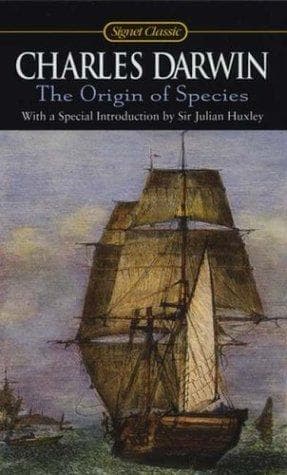
On the Origin of Species
by Charles Darwin
💡 We earn from qualifying purchases. Learn more
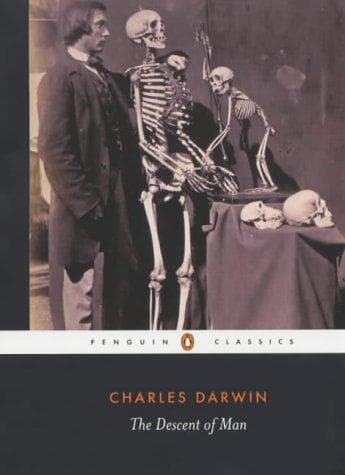
The Descent of Man
by Charles Darwin
💡 We earn from qualifying purchases. Learn more
Quick Comparison
| Feature | On the Origin of Species | The Descent of Man |
|---|---|---|
| Subject | Evolution in all life | Human evolution specifically |
| Argument | Natural selection mechanism | Sexual selection & human origins |
| Controversy | Shocking in 1859 | Even more controversial (humans) |
| Page Count | 502 pages | 785 pages (much longer) |
| Publication | 1859 (groundbreaking) | 1871 (12 years later) |
| Cultural Impact | Revolutionized biology | Significant but overshadowed |
| Focus | General evolutionary theory | Human evolution & sexual selection |
| Accessibility | More focused and accessible | Longer, more sprawling |
| Feature | On the Origin of Species | The Descent of Man |
|---|---|---|
| Subject | Evolution in all life | Human evolution specifically |
| Argument | Natural selection mechanism | Sexual selection & human origins |
| Controversy | Shocking in 1859 | Even more controversial (humans) |
| Page Count | 502 pages | 785 pages (much longer) |
| Publication | 1859 (groundbreaking) | 1871 (12 years later) |
| Cultural Impact | Revolutionized biology | Significant but overshadowed |
| Focus | General evolutionary theory | Human evolution & sexual selection |
| Accessibility | More focused and accessible | Longer, more sprawling |
Strengths & Weaknesses
On the Origin of Species
✓ Strengths
- ✓One of the most important scientific books ever—revolutionized biology. Published November 24, 1859, all 1,250 copies sold first day. Darwin spent 20+ years building evidence after 1831-1836 HMS Beagle voyage (Galápagos finches, South American fossils)
- ✓Natural selection argued through cumulative evidence. Domestic breeding shows selection works (Darwin bred pigeons obsessively). Geographic distribution explains island species. Embryology shows similarities. Vestigial organs like whale hip bones prove ancestry
- ✓The struggle for existence is elegantly brutal: organisms produce more offspring than survive (elephants could yield 15 million descendants in 500 years), 'a grain in the balance' determines who lives. Tiny differences compound over millions of years
- ✓Darwin strategically avoided human evolution—knew claiming humans evolved would derail everything with religious outrage. Only hints in final pages: 'Light will be thrown on the origin of man.' Saved explosive claim for Descent 12 years later
- ✓Relatively accessible despite Victorian writing. Clear examples from Beagle voyage (Darwin collected 1,529 species), logical arguments, personal observations (barnacles, orchids, earthworms). Dense 502 pages from 1859 but readable without biology degree
✗ Weaknesses
- ✗Darwin didn't know about genetics—Gregor Mendel's pea experiments (1866) weren't rediscovered until 1900, 18 years after Darwin died. His 'pangenesis' heredity theory is completely wrong. Natural selection correct, genetics outdated. Took until 1930s Modern Synthesis
- ✗Victorian prose is challenging. Long sentences with multiple clauses, formal language, extensive Latin taxonomy. 'Species at any one period are not indefinitely variable' instead of 'Species don't change infinitely fast.' Takes patience
- ✗Very long with repetitive examples. Three chapters on domestic breeding (pigeons, dogs, cattle), endless barnacle discussions (Darwin spent 8 years studying barnacles 1846-1854). Building overwhelming case but modern readers find it tedious. Could cut 200 pages
- ✗Racist and sexist Victorian assumptions throughout. 'Savage races' versus 'civilized races,' women intellectually inferior. Not central to theory but present, reflecting 1850s British Empire prejudices. Modern editions add contextualizing notes
The Descent of Man
✓ Strengths
- ✓Darwin addresses human evolution directly: 'Man...still bears in his bodily frame the indelible stamp of his lowly origin.' Humans descended from ape-like ancestors, evolved in Africa (confirmed 100+ years later—Lucy discovered 1974). Explosive in 1871 Victorian England
- ✓Sexual selection theory is groundbreaking. Traits evolve for mating success, not survival. Peacock tails (handicap attracting females), elk antlers, bird songs, human beards—costly displays winning mates. Darwin noticed females choose, driving male ornament evolution. Fully appreciated in 1970s-1980s
- ✓Comprehensive human origins treatment. Body hair loss, bipedalism (freeing hands for tools), brain expansion (social intelligence), language origins (gradualism from animal calls), moral sense, religion, art, music. Ambitious Victorian evolutionary psychology predating field by century
- ✓Sexual dimorphism sections are fascinating. Why males have beards and deeper voices (testosterone signals), why females choose mates (higher parental investment—Robert Trivers 1972), how mating systems affect evolution. Courtship displays cataloged across beetles, birds, mammals, fish
- ✓Together with Origin, creates complete evolutionary picture. Natural selection explains survival adaptations (camouflage, speed), sexual selection explains mating adaptations (peacock tails, courtship). Origin 1859 laid foundation, Descent 1871 adds human application and sexual selection
✗ Weaknesses
- ✗Much longer and sprawling—785 pages versus Origin's 502. Covers too many topics: human evolution, sexual selection, race, sex, moral evolution, music, language, facial expressions. Lacks Origin's focused structure. Feels overstuffed and repetitive
- ✗Victorian race and gender attitudes are deeply offensive. Ranks races 'savage' to 'civilized,' argues women intellectually inferior with smaller brains, claims Europeans more highly evolved. Mainstream Victorian science (Francis Galton, Social Darwinism) but appalling today. Modern editions need critical introductions
- ✗Sexual selection sections become tedious catalogs. Hundreds of pages documenting bird plumage (peacocks, pheasants), beetle horns, fish colors, monkey patterns. Darwin building overwhelming case like Origin, but you get overwhelmed. Modern readers skim unless into 19th-century natural history
- ✗Assumes you've read Origin first. References natural selection, common descent, deep time, comparative anatomy without re-explaining. Jump to Descent and you'll miss foundation—struggle for existence, variation, inheritance, differential reproduction. It's explicitly a sequel
Memorable Quotes
On the Origin of Species
💭 "It is not the strongest of the species that survives, nor the most intelligent that survives. It is the one that is most adaptable to change."
💭 "There is grandeur in this view of life, with its several powers, having been originally breathed into a few forms or into one."
💭 "The highest possible stage in moral culture is when we recognize that we ought to control our thoughts."
💭 "In the long history of humankind (and animal kind, too) those who learned to collaborate and improvise most effectively have prevailed."
💭 "Natural selection acts only by taking advantage of slight successive variations; she can never take a leap, but must advance by the shortest and slowest steps."
The Descent of Man
💭 "Man with all his noble qualities... still bears in his bodily frame the indelible stamp of his lowly origin."
💭 "The main conclusion arrived at in this work, namely that man is descended from some lowly organised form, will, I regret to think, be highly distasteful to many."
💭 "We civilised men... do our utmost to check the process of elimination; we build asylums for the imbecile, the maimed, and the sick."
💭 "The belief in God has often been advanced as not only the greatest, but the most complete of all the distinctions between man and the lower animals."
💭 "Sympathy beyond the confines of man, that is, humanity to the lower animals, seems to be one of the latest moral acquisitions."
Why Read This?
On the Origin of Species
- •You want THE foundational text that revolutionized biology
- •You're interested in evolution by natural selection
- •You want more focused, structured argument
- •You need foundation before reading Descent of Man
- •You want Darwin's most important and influential work
The Descent of Man
- •You want Darwin's explicit treatment of human evolution
- •You're interested in sexual selection theory
- •You've read Origin and want the human-specific sequel
- •You're interested in Victorian anthropology and psychology
- •You want comprehensive treatment of human origins
🏆 The Verdict
On the Origin of Species dominates with 23,000 ratings at 4.4 stars versus 8,900 at 4.3 stars—nearly triple the readership. Origin is THE revolutionary masterpiece that changed everything, published November 24, 1859 (sold out 1,250 copies first day). Descent of Man is important but secondary—applying Origin's theory to humans and introducing sexual selection 12 years later. Origin is focused, structured, foundational (502 pages). Descent is longer, more sprawling, assumes you've read Origin (785 pages).
Read On the Origin of Species first—it's Darwin's masterpiece and one of the most important scientific works ever. Darwin spent 20+ years after his 1831-1836 HMS Beagle voyage building the case for evolution by natural selection. The 502 pages build cumulative proof through domestic breeding (Darwin bred pigeons obsessively, documented variation), geographic distribution (Galápagos finches vary by island), embryology (vertebrate embryos look similar early), vestigial organs (whale hip bones prove ancestry), and fossil transitional forms. The struggle for existence is elegant—organisms produce more offspring than survive (elephants could yield 15 million in 500 years), 'a grain in the balance' determines who lives and dies. Darwin strategically avoided human evolution (only hints: 'Light will be thrown on the origin of man'), saving that for Descent 12 years later. Only read The Descent of Man after mastering Origin. Darwin finally addresses humans: 'Man...still bears in his bodily frame the indelible stamp of his lowly origin.' Humans descended from ape-like ancestors, evolved in Africa (confirmed by Lucy 1974, other fossils). Sexual selection theory is groundbreaking—peacock tails, elk antlers, bird songs evolve for mating not survival, females choose driving male ornament evolution (not fully appreciated until 1970s). But it's 785 sprawling pages covering too much (human evolution, sexual selection, race, gender, morality, music, language), and Victorian attitudes on race and gender are deeply offensive (ranks races 'savage' to 'civilized,' claims women inferior). Modern critical editions need contextualizing introductions. Important for sexual selection and human evolution, but Origin is the revolutionary masterwork.
You Might Also Like
More comparisons in this category to help you make the right choice
Explore More Comparisons
Browse all our book comparisons across different genres
All ComparisonsExplore comparisons by category: History & Philosophy and more
Browse CategoriesHave a comparison request? We'd love to hear from you!
Request Comparison